Skilled care, in your own home
Home health is medical care your doctor orders, delivered by licensed clinicians who visit on a schedule. Here's what each kind of care covers, and how to tell whether home health is what you need.

What we provide
Skilled nursing
Registered and licensed vocational nurses who visit on a schedule your doctor sets.
Often includes- Wound and incision care
- Medication review and teaching
- Injections and IV therapy
- Monitoring heart failure, COPD, or diabetes
- Teaching family members what to watch for

Physical therapy
Licensed physical therapists who work with you on the stairs, hallways, and chairs you actually use.
Often includes- Strength and balance after surgery or a fall
- Walking with a cane or walker
- Getting in and out of bed, chairs, and the car
- A home exercise plan you can keep up

Occupational therapy
Occupational therapists who help you do everyday things safely, your way.
Often includes- Bathing, dressing, and grooming
- Kitchen and household tasks
- Energy-saving techniques
- Advice on grab bars and other equipment
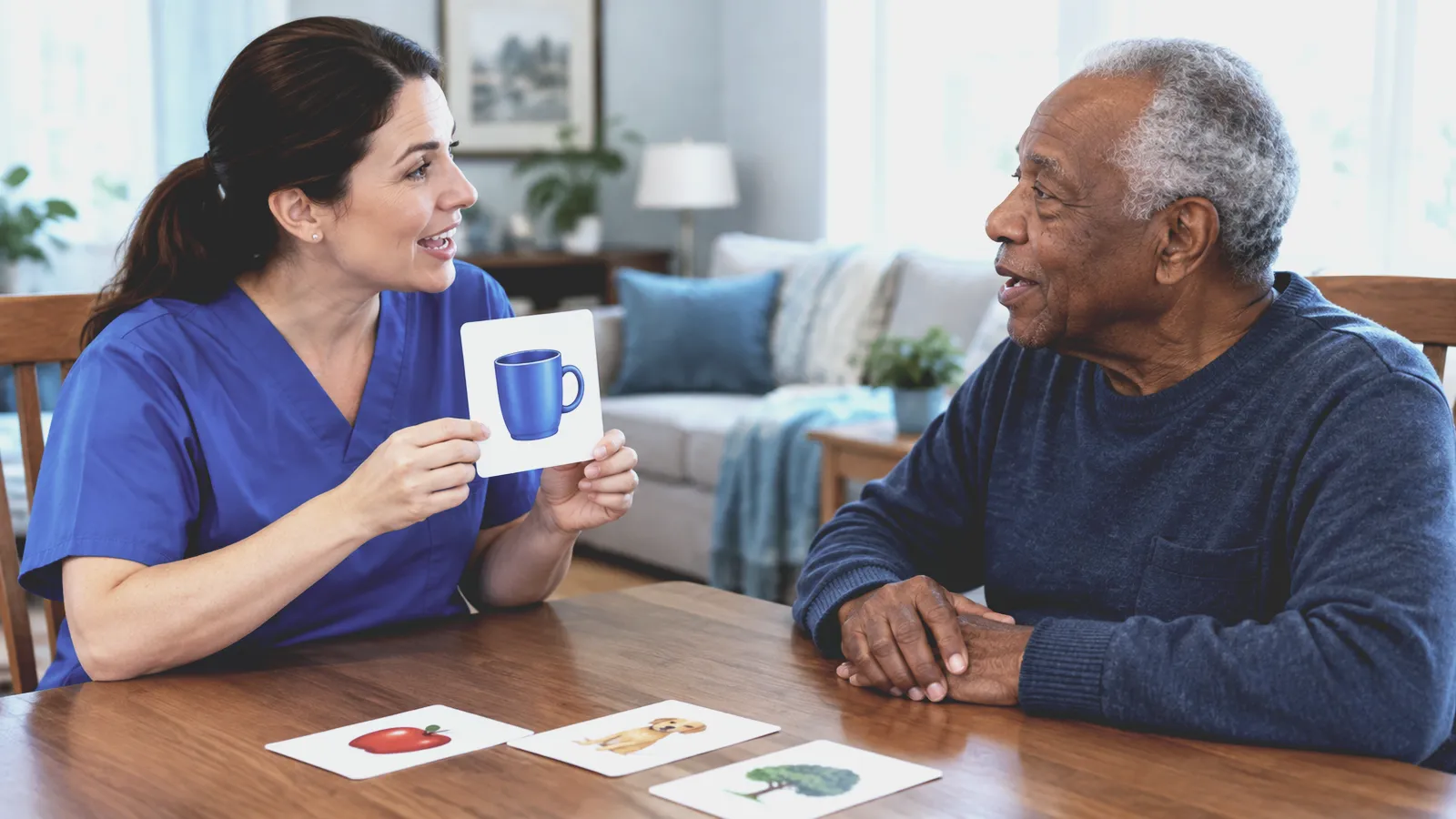
Speech-language pathology
Speech-language pathologists for speech, swallowing, and thinking skills.
Often includes- Speech and word-finding after a stroke
- Safer swallowing
- Memory and attention strategies
- Ways for family to communicate more easily

Medical social work
Medical social workers who connect you with support beyond the medical.
Often includes- Community resources and benefits
- Planning for care at home
- Advance-care planning conversations
- Support for caregivers

Home health aide
Home health aides who help with personal care while you receive skilled care.
Often includes- Bathing and personal care
- Help with mobility at home
- Part of your skilled plan of care, not a standalone service
Home health or home care?
They sound alike but they’re different services. Home health is skilled, medical care ordered by a doctor, such as nursing or therapy, usually for a period of recovery. Home care is non-medical help with daily life, like meals, housekeeping, or companionship.
Medicare can cover home health when certain conditions are met. It generally doesn’t cover ongoing non-medical help on its own.
Choose the option that sounds closest. This is a guide, not a decision: your doctor and our team confirm what fits.
Visits that fit around your life
Scheduled, not round-the-clock
Clinicians visit for set appointments, often a few times a week, following the plan your doctor approves.
Your doctor stays in charge
We send updates to your doctor and adjust the plan with them as you progress.
Family in the loop
With your permission, a family member can get visit times and updates.
One number to call
Questions between visits go to the same intake team that set up your care.